Bharat Insights · Report 01

Free PDFFree PDF · no sign-up

Report 01 · October 2026

Modern Marriage

How young Indians in smaller towns navigate love and arranged marriages, from the first match to the final yes

LokalThe India Notes

Download the report (PDF)

Free PDF · No sign-up · No email

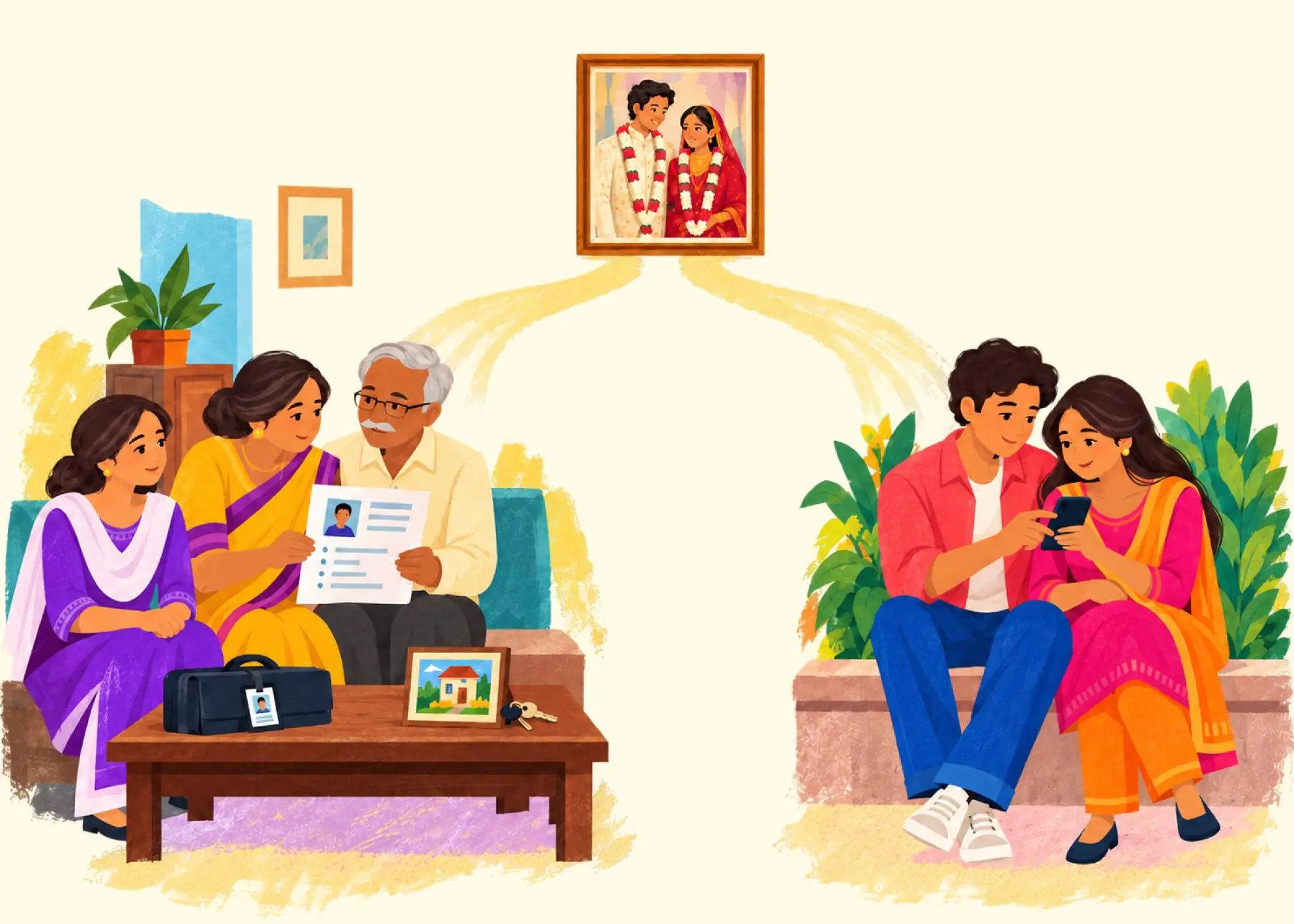
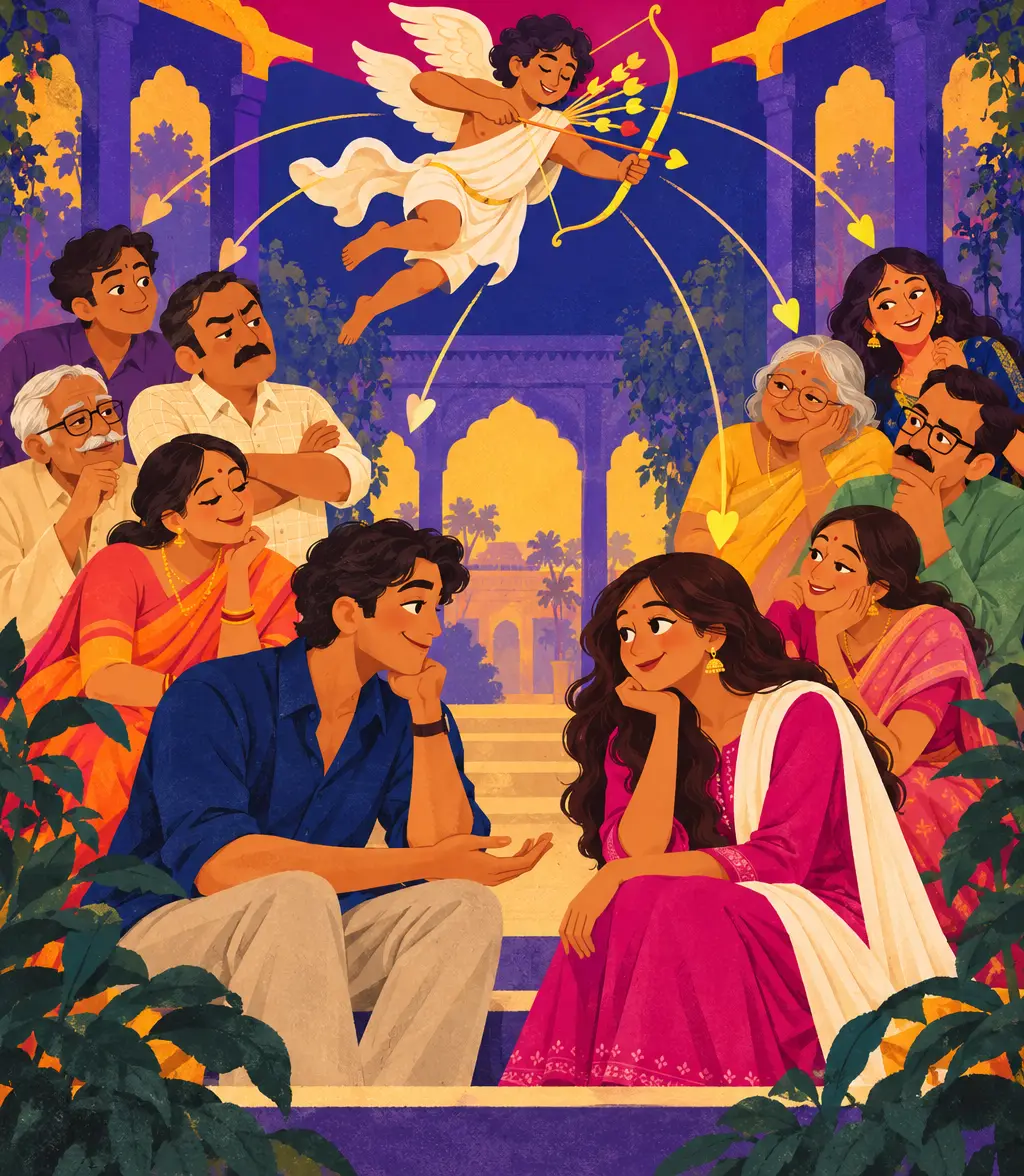
Illustration: a young couple chat on sunlit temple steps while both their families lean in to watch, and a cupid aims arrows at the relatives.
  • 45In-depth interviewsProspects and parents
  • 692Survey respondentsThree respondent groups
  • 21Interview citiesAcross the fieldwork
  • 8Surveyed statesNot a national estimate

Scope of this study as fielded — not a nationally representative estimate. Source & sample →

The big question

How do you take a deeply personal choice between two people and get both families on board?

Arranged marriage starts with a family-approved match and builds love. Love marriage starts with love and works towards family approval.

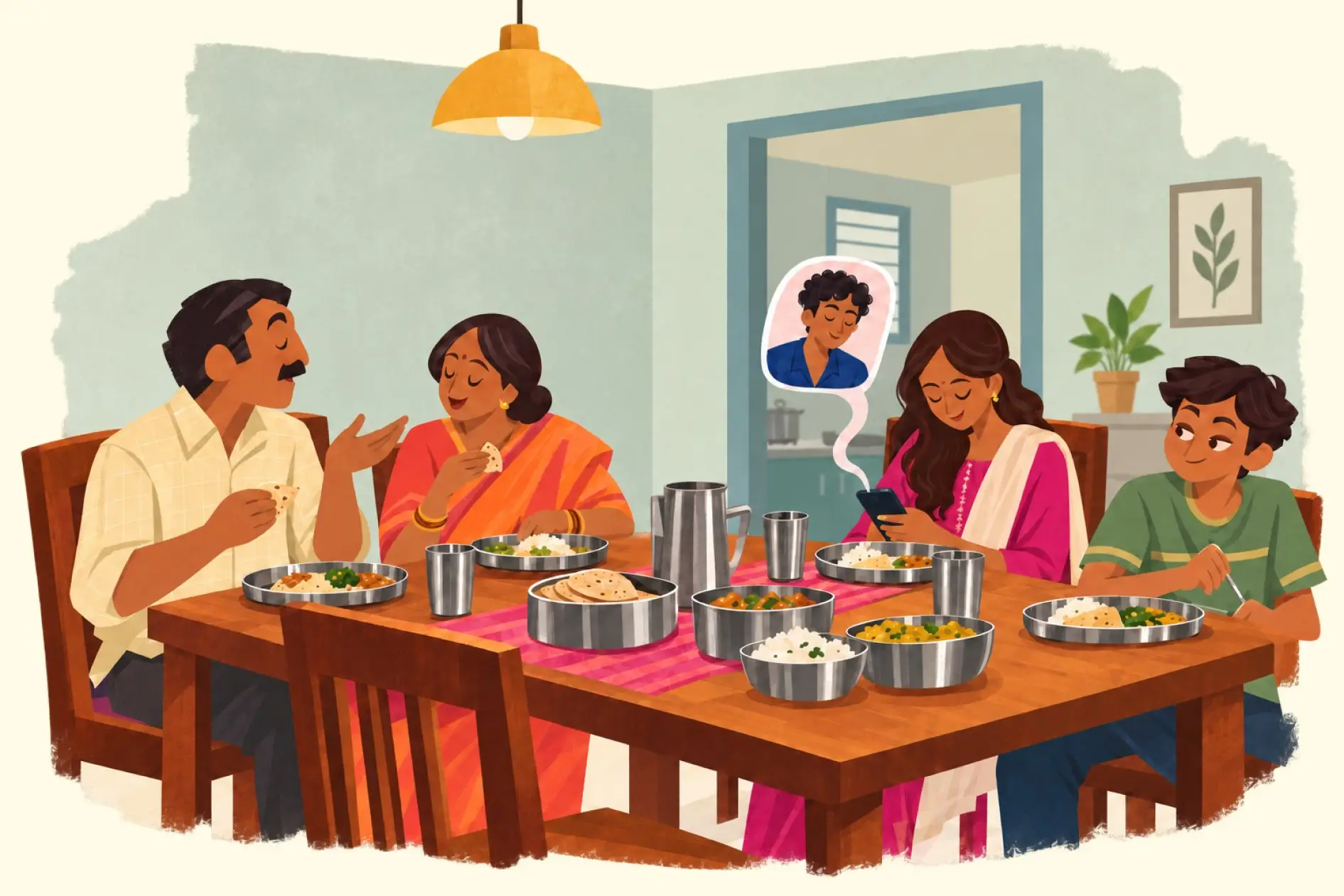
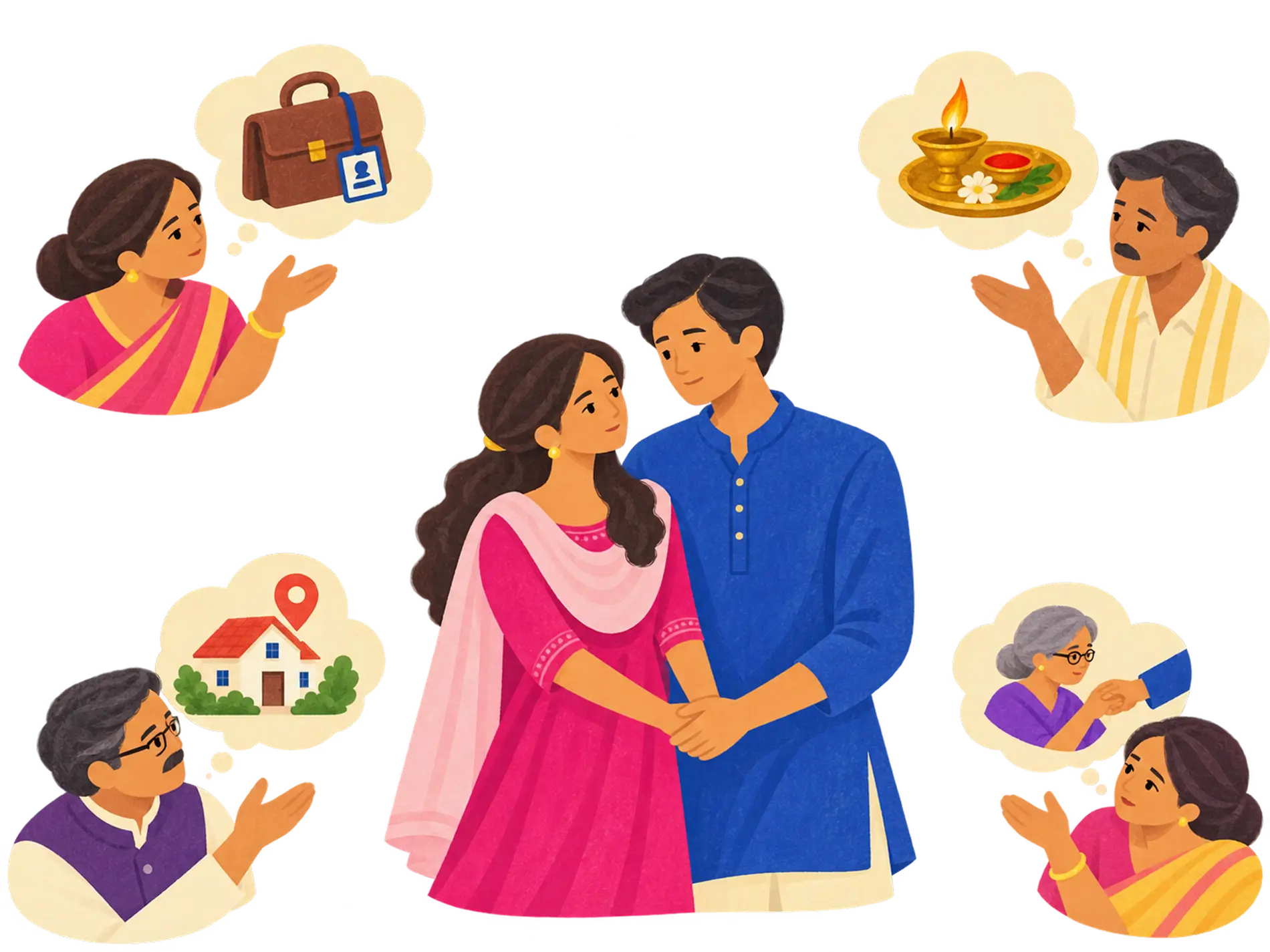
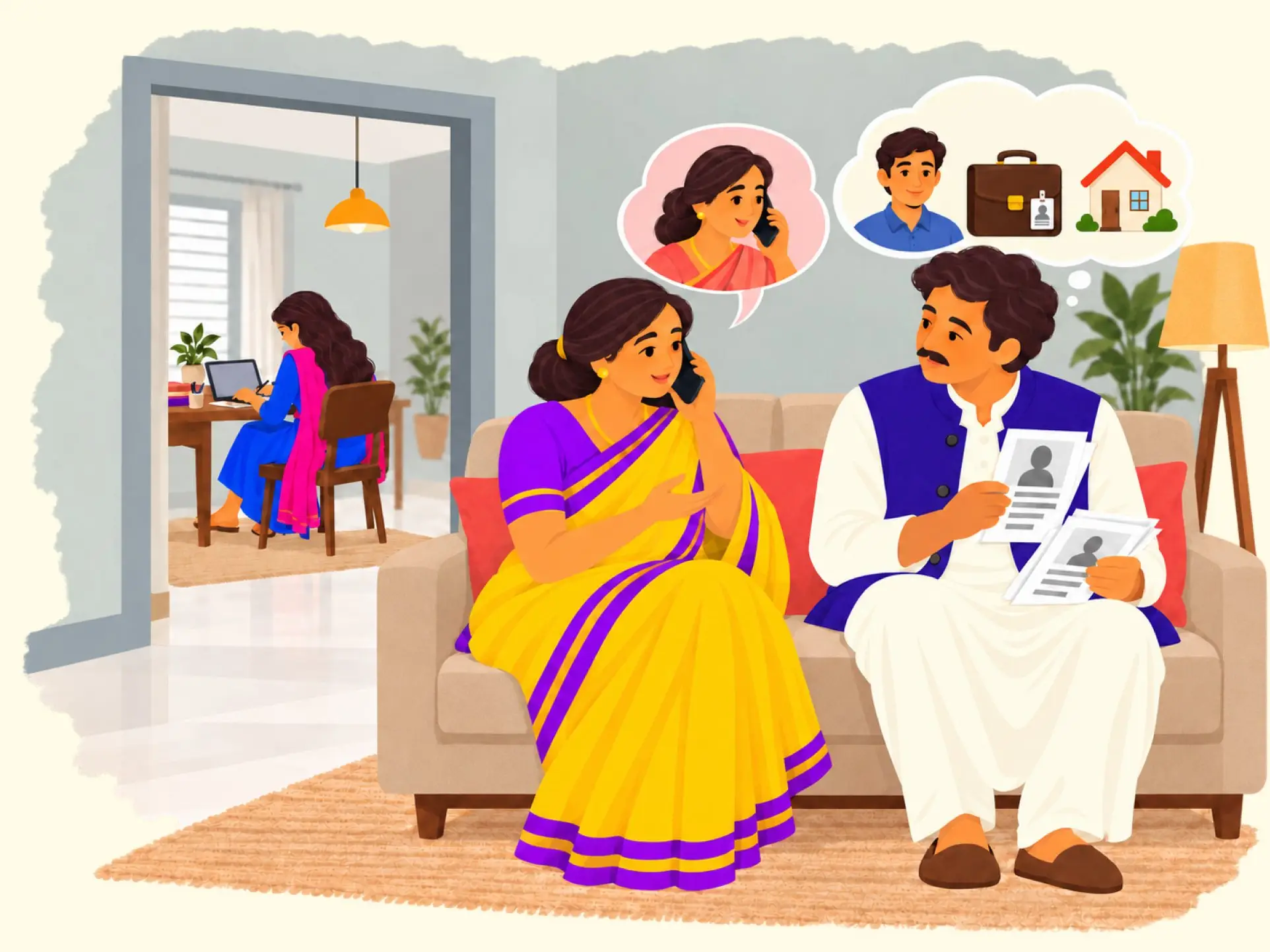
Either way, nobody decides alone. Couples recruit sisters and cousins to break the news of love at home. Fathers forward biodatas on WhatsApp groups and pray for a match. A marriage is rarely one decision made by two people. It is a series of negotiations between people who don’t always want the same things.

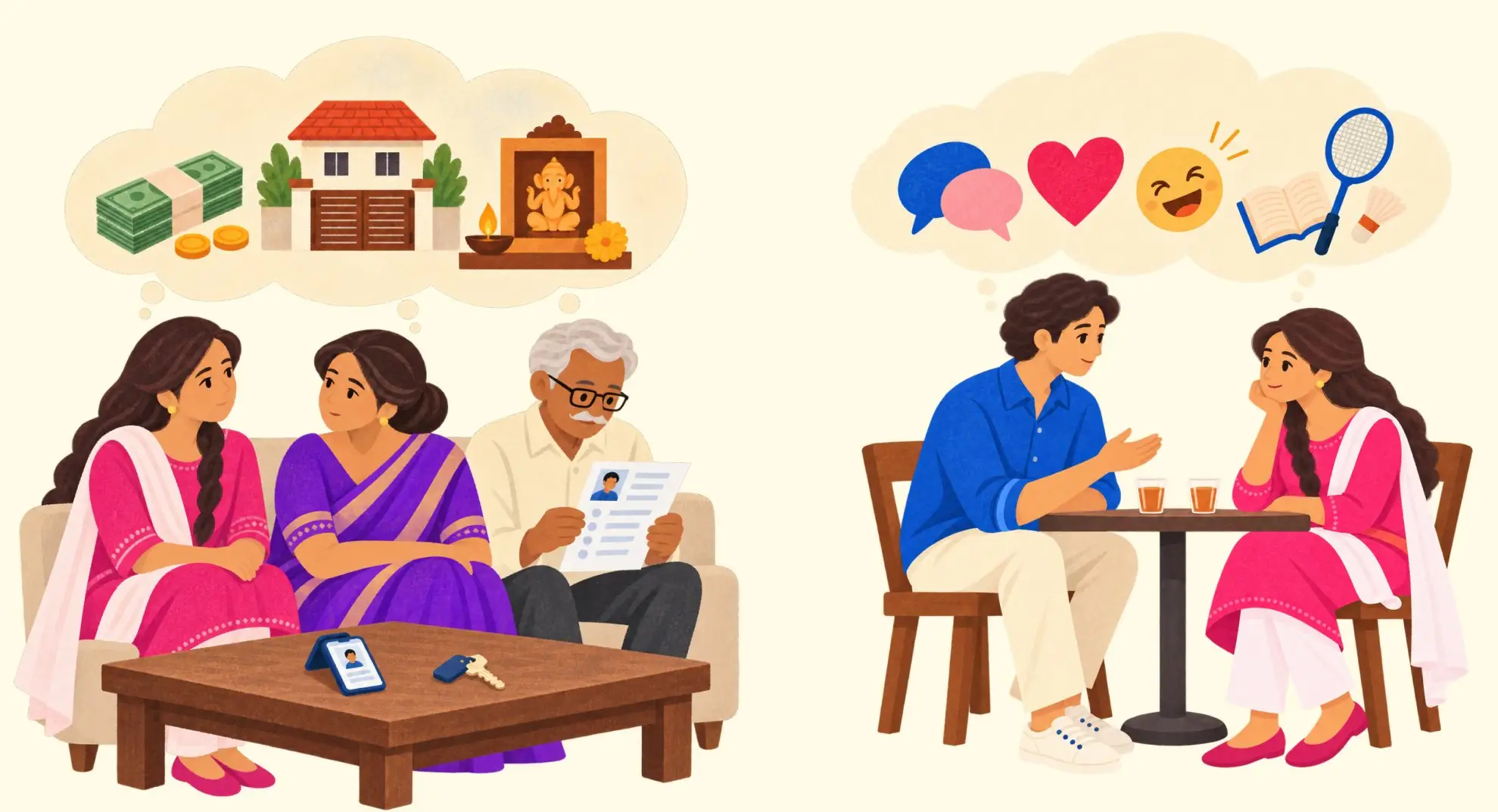
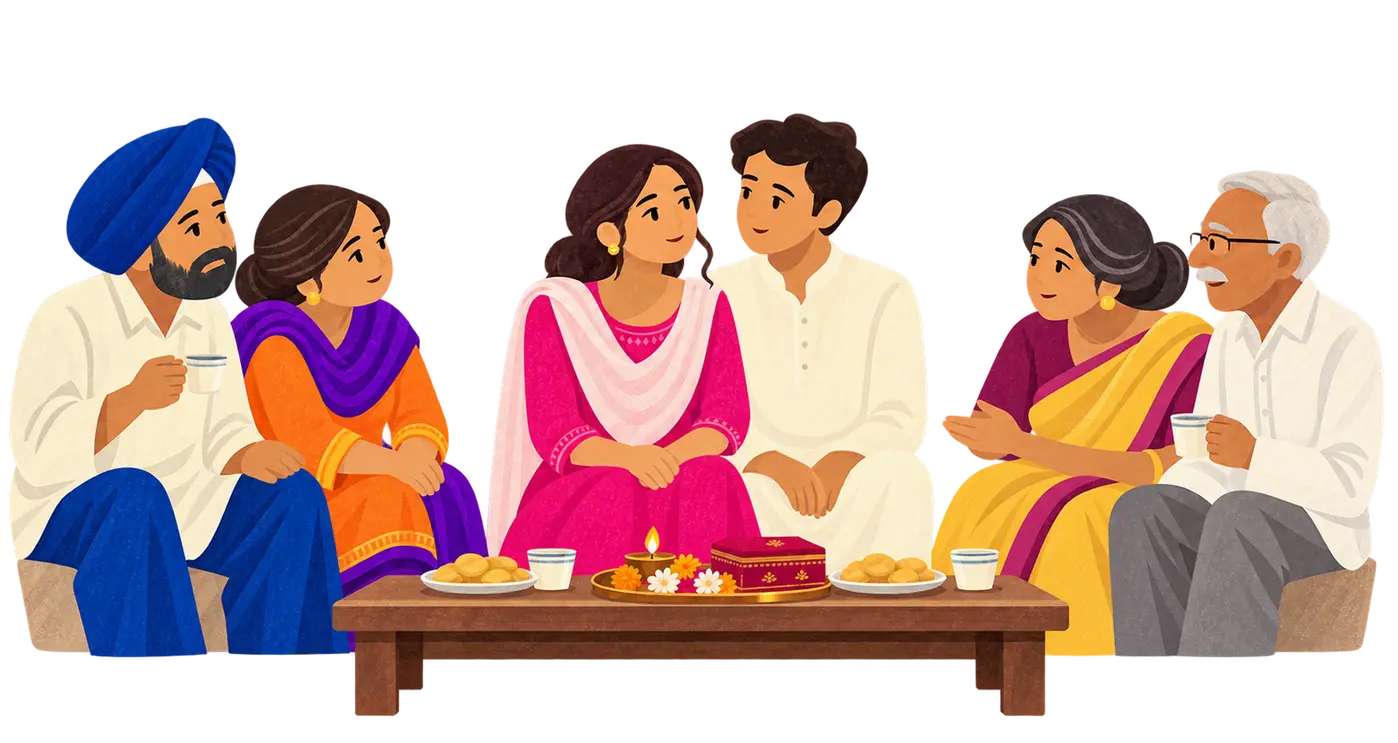
A family gathered on sofas around a low table, talking a match through together.

Arranged: starts with credibility

The family approves first. Then the couple has to find out whether they actually connect.

Love: starts with intimacy

The couple already knows each other. Then the family has to be brought round.

What the numbers say

So what’s important across love and arranged marriage?

Every figure carries its own base: 287 people searching on Lokal, 142 arranged-married or 263 love-married respondents. We never blend the groups into one number.

  • 1 in 5

    love-marriage respondents told their parents first. That’s 53 of 263.

    Base: 263 love-marriage respondents

  • 73%

    of love-marriage respondents still needed their parents’ approval before going ahead.

    Base: 263 love-marriage respondents

  • 57%

    of love-marriage respondents married within their own caste. That’s 151 of 263.

    Base: 263 love-marriage respondents

  • 64%

    of people searching on Lokal for over a year feel worn down or ready to settle, against 38% of those searching for under a year.

    Base: people searching on Lokal for over a year (n=109)

  • 40%

    of people searching on Lokal have used a broker, but only 4% trust one most.

    Base: 287 people searching on Lokal

  • 75% vs 44%

    of women vs men in love marriages count job and income as a must-have in a partner.

    Base: 263 love-marriage respondents (130 women, 133 men)

Two marriage journeys

Same destination. Opposite starting points.

Arranged marriage is family-led: parents filter for suitability first, then hand over to the couple. Love marriage is couple-led: the two build the bond first, then bring in the parents for approval.

10 steps · swipe →- - - loops back

Arranged · Family-ledSuitability first, then compatibility

  1. Step 1: Trigger

    What age or time is ideal for marriage?

    Ch.01 Different beginnings →
  2. Step 2: Family setting criteria

    What does the family look for in a match?

    Ch.03 Criteria & risk →
  3. Step 3: Looking out

    How does the family start looking for a match?

    Ch.05 Search & trust →
  4. Step 4: Biodata filtering

    What does one look for in a match?

    Ch.03 Criteria & risk →
  5. Step 5: Mismatch & resetting the search

    Why do matches fall through?

    Ch.07 Stepping back →
    Refusal loop: can go back to step 2.
  6. Step 6: Getting to know

    Do the two people actually connect?

    Ch.04 Getting to know →
  7. Step 7: Meeting the prospect

    How do the two families evaluate each other?

    Ch.04 Getting to know →
  8. Step 8: Verification

    What was verified before finalising the match?

    Ch.05 Search & trust →
    Verification loop: can go back to step 3.
  9. Both paths meet

    Step 9: Family negotiation

    Is everyone satisfied with the match?

    Ch.06 Beyond approval →
  10. Step 10: Agreement

    Both families say yes.

    Ch.06 Beyond approval →

Love · Couple-ledCompatibility first, then family approval

  1. Step 1: Trigger

    What pushed dating into deciding to marry?

    Ch.01 Different beginnings →
  2. Step 2: Concealment

    How long was the relationship kept hidden?

    Ch.02 Making it known →
  3. Step 3: Through a channel

    Who was trusted with the secret first?

    Ch.02 Making it known →
  4. Step 4: Family curiosity

    How did parents react when they found out?

    Ch.02 Making it known →
  5. Step 5: Family meeting the partner

    What questions were asked to the partner?

    Ch.06 Beyond approval →
  6. Step 6: Convincing

    How did the couple convince parents?

    Ch.06 Beyond approval →
  7. Step 7: Verification

    What was checked before finalising?

    Ch.05 Search & trust →
  8. Step 8: Families meeting

    What did the two families discuss?

    Ch.06 Beyond approval →
  9. Both paths meet

    Step 9: Family negotiation

    Is everyone satisfied with the match?

    Ch.06 Beyond approval →
  10. Step 10: Agreement

    Both families say yes.

    Ch.06 Beyond approval →

Not a fixed funnel: dashed lines show where matches loop back. Both journeys meet at family negotiation. Each step links to the chapter that explains it.Not a fixed funnel. Matches can loop back to earlier steps. Both journeys meet at family negotiation. Tap a step to open its chapter.

Explore the insights

Seven questions.
A closer understanding.

Start with what you want to understand. Then follow the evidence behind it.

Chapter 03 / 07 · Criteria & risk

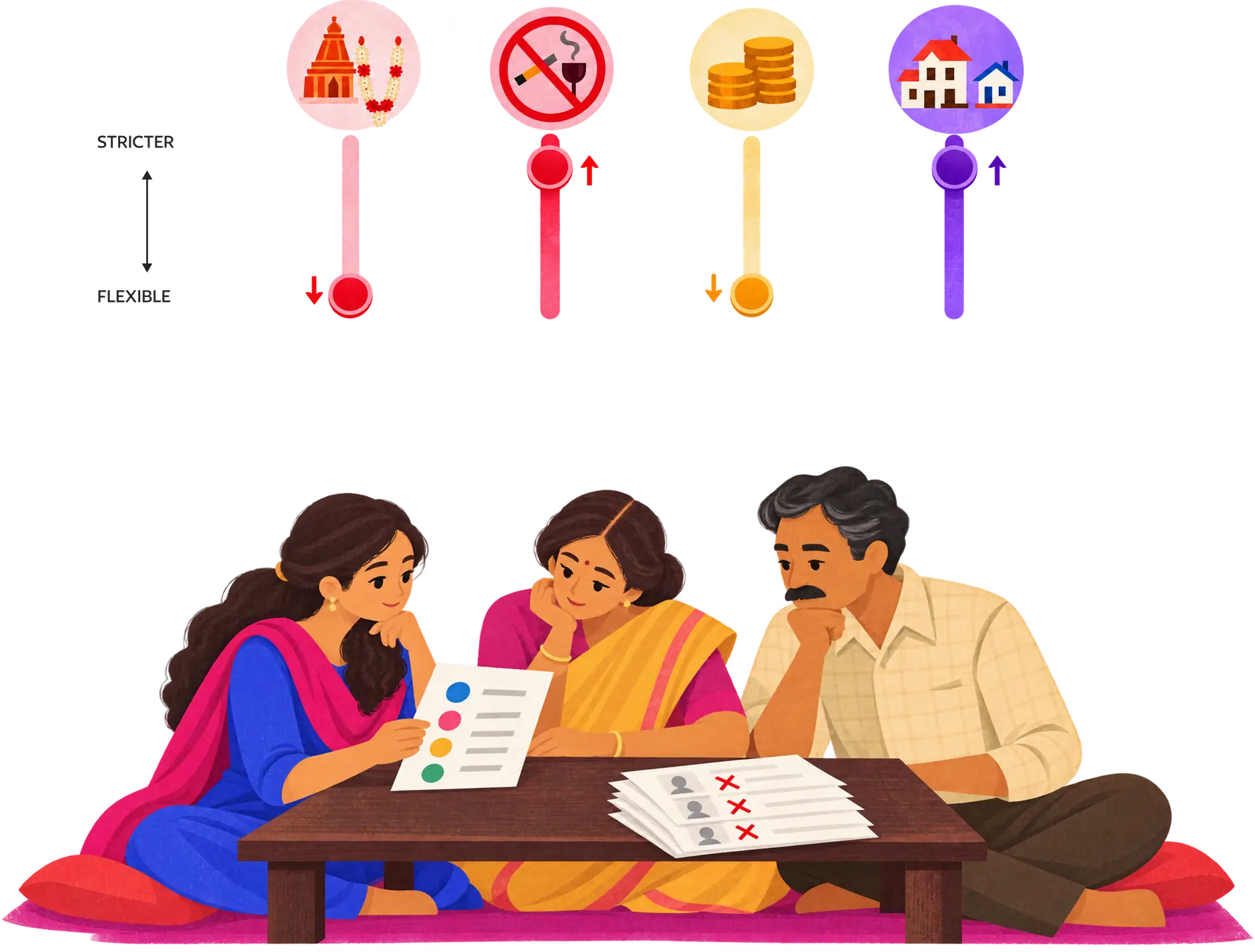
What sits behind location, caste, horoscope and money criteria?

From the report — Theme 03: Location, caste, horoscope and money are how families manage marriage risk.

The finding

A filter for a partner can also be a forecast of the life a family expects after marriage.

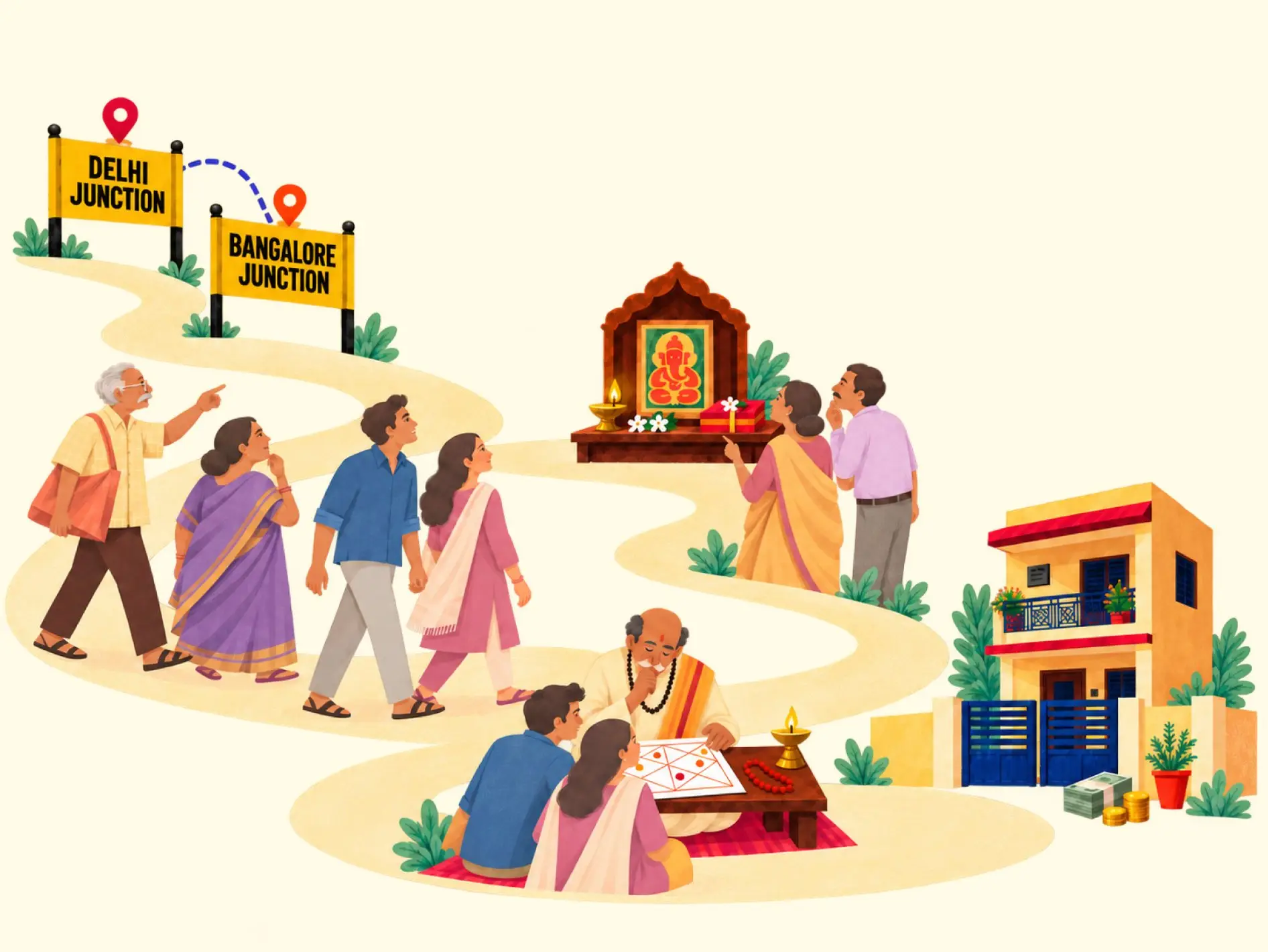
Location stands in for careers and caring for parents. Caste for household expectations and social acceptance. Horoscope for reassurance or permission. Money for stability and readiness. Some boundaries bend; others stay firm.

A winding road with signposts, where families walk past houses and a temple towards a wedding venue.

Arranged vs Love

Arranged-marriedn = 142

78%

call caste or community strictly non-negotiable. The household sets the filter before anyone meets.

Love-marriedn = 263

48%

say the same. The filter arrives after the choice, as a condition to negotiate with family.

Figure · Married respondents only

What did married respondents call non-negotiable?

Share rating each profile criterion strictly non-negotiable

n = 142 · n = 263

Arranged-married (n = 142)Love-married (n = 263)

  • Caste or community78%48%
  • Religion78%48%
  • Education76%62%
  • Family name & standing75%49%
  • Job and income73%59%
  • Look after parents73%63%
  • Living with in-laws vs own65%55%
  • City or town63%50%
  • Work after marriage63%56%
  • Horoscope match61%37%
  • Habits (smoking / drinking)57%50%
  • Looks and height56%50%
Base: 142 arranged-married and 263 love-married respondents, shown side by side, never pooled. Each criterion is rated separately, so percentages do not add up to a total. Excludes the 287 people searching on Lokal. Stated non-negotiability, not negotiation outcomes. Source: report, Theme 03.

A story from the interviews

Shivani Arora · Lucknow

As an only child, Shivani wanted to stay within reach of her parents. Her location preference was also a decision about elder care and travel, not simply a liking for one city.

Name changed to protect privacy.

What this helps us understand

A stated criterion does not explain the concern behind it. The same filter can stand for different needs, expectations or pressures across households.

← 02 Making it knownRead on The India Notes — coming soon04 Getting to know →

Five deep-dives

The marriage economy around the search

Inside the report, five short reads on the machinery families lean on, and the people who profit from it.

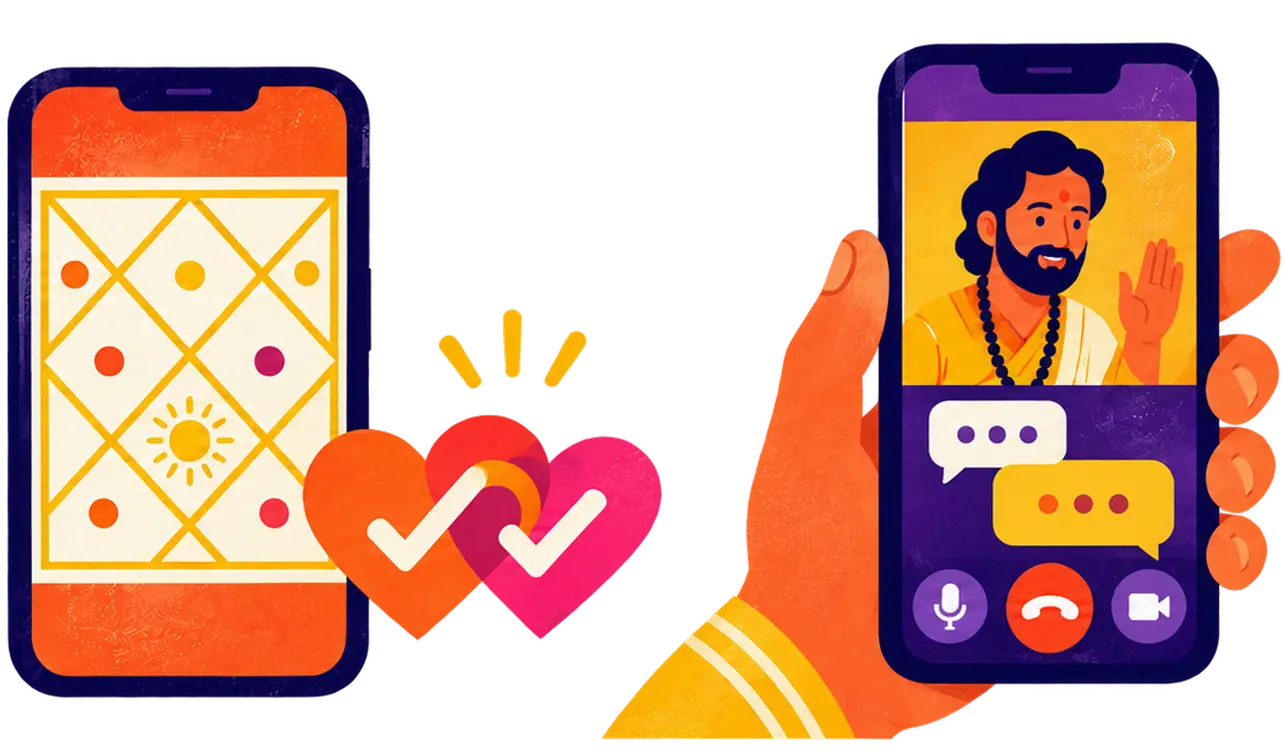
  • A phone showing a kundli chart next to another phone on a video call with an astrologer.

    Digital astrology

    Horoscopes go digital

    Kundli matching has moved onto apps and astrologer video calls. The ritual stayed. The gatekeeper changed.

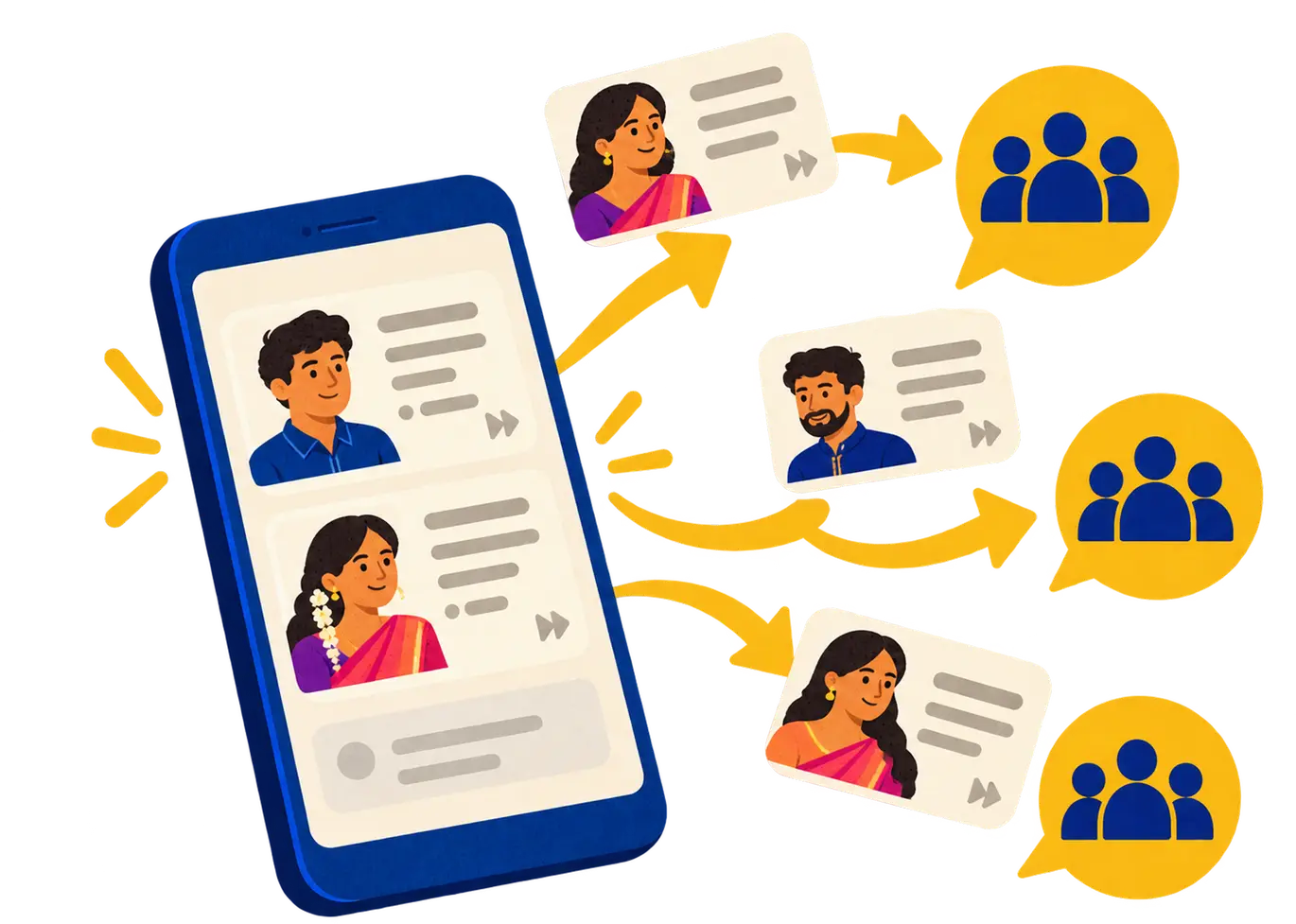
  • A profile on a phone being forwarded out to many group chats.

    Biodata online

    Once a biodata goes online, it stops belonging to you

    Profiles travel through WhatsApp groups and relatives’ phones that the person in them never sees.

  • A detective in a hat and trench coat holding a magnifying glass.

    Private investigators

    The pre-marriage spy economy

    When a biodata can’t answer the question, some families pay someone to check the job, the house and the past.

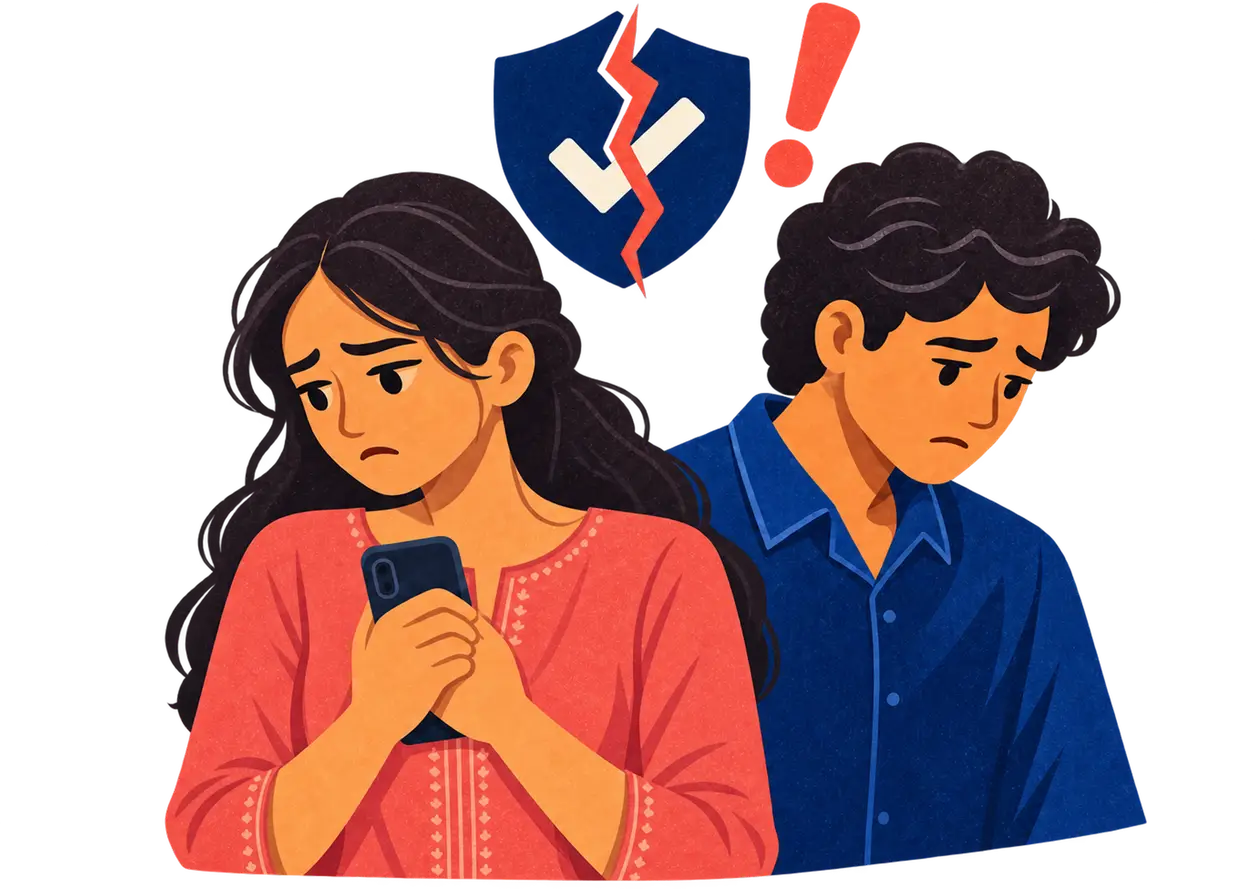
  • A worried young couple looking at a phone under a broken security shield and a warning sign.

    Marriage scams

    The matrimonial scam economy

    “They take the advance, and after that, their phones are switched off.” Fake profiles and paid “unlocks” prey on long searches.

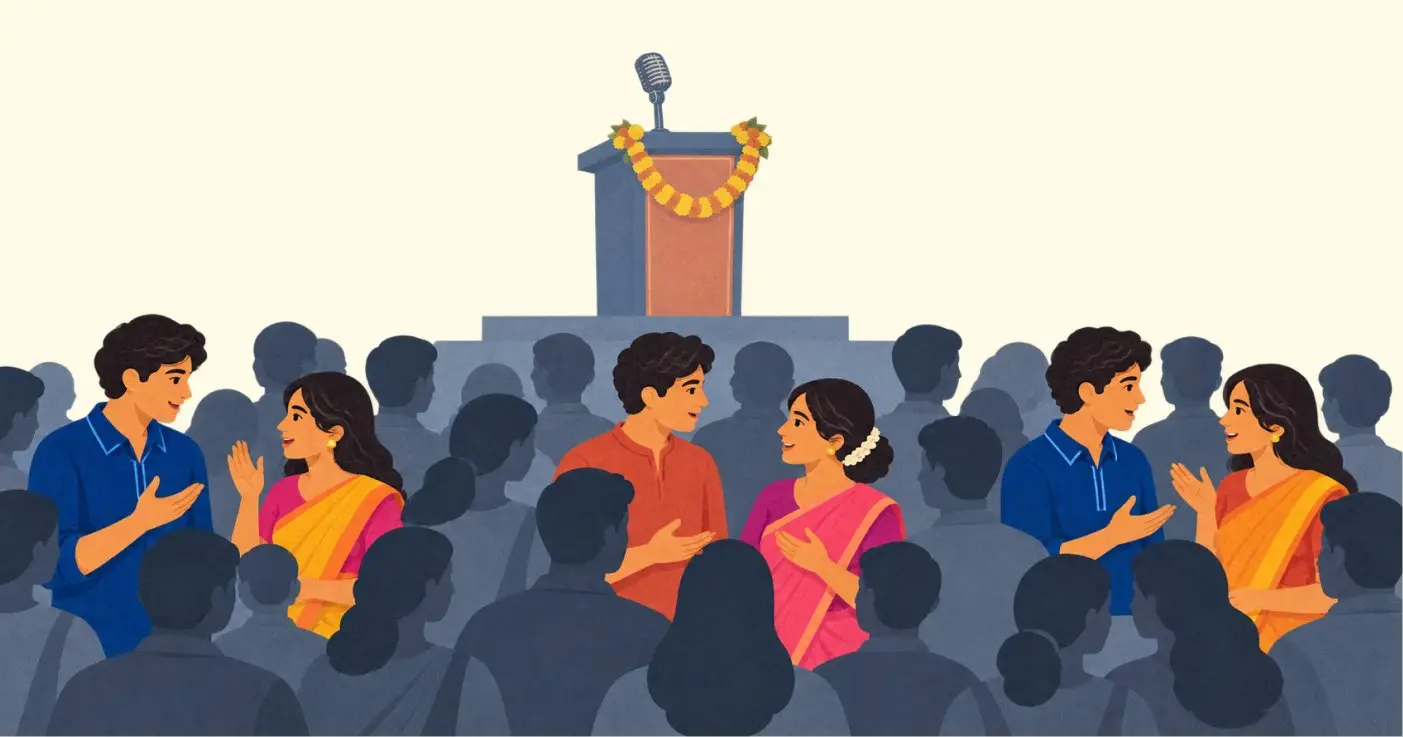
  • A crowded community hall where a speaker addresses families at a matrimonial sammelan.

    Offline matchmaking

    The offline matchmaking machine

    Caste directories, sammelans and brokers still run much of the search. Copying one number from “the big book” costs ₹30 to ₹50.

In their words

The people behind the numbers

From our 45 interviews. Names are pseudonyms, as in the report.

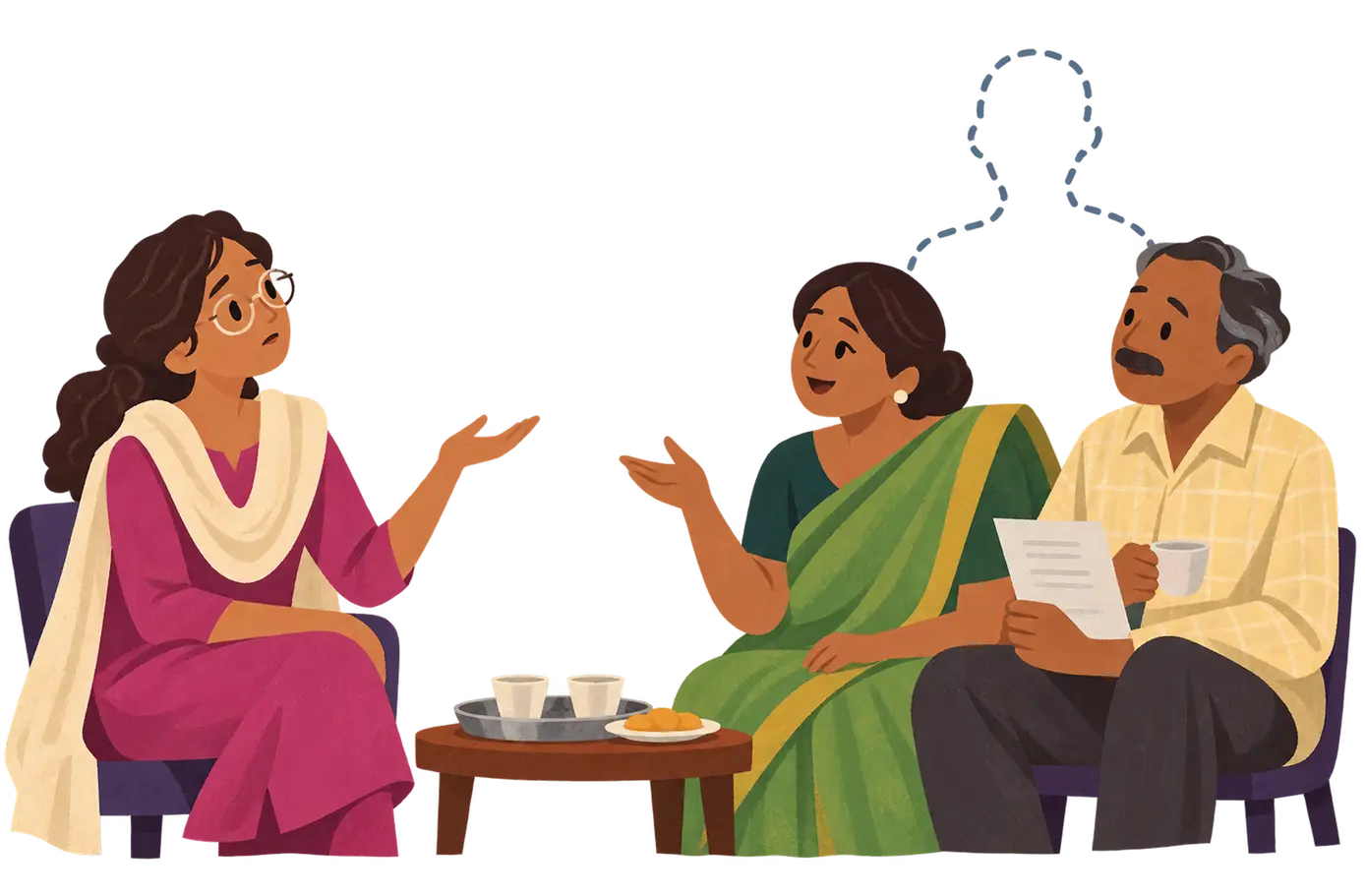
  • A young woman sits beside two parents doing all the talking, while the prospective groom is only an outline.

    “That boy didn’t really talk to me ever. So just his parents talked, so I didn’t feel like yeah let’s move forward…”

    K. Deepthi, 25Teacher, Visakhapatnam · searching for an arranged match
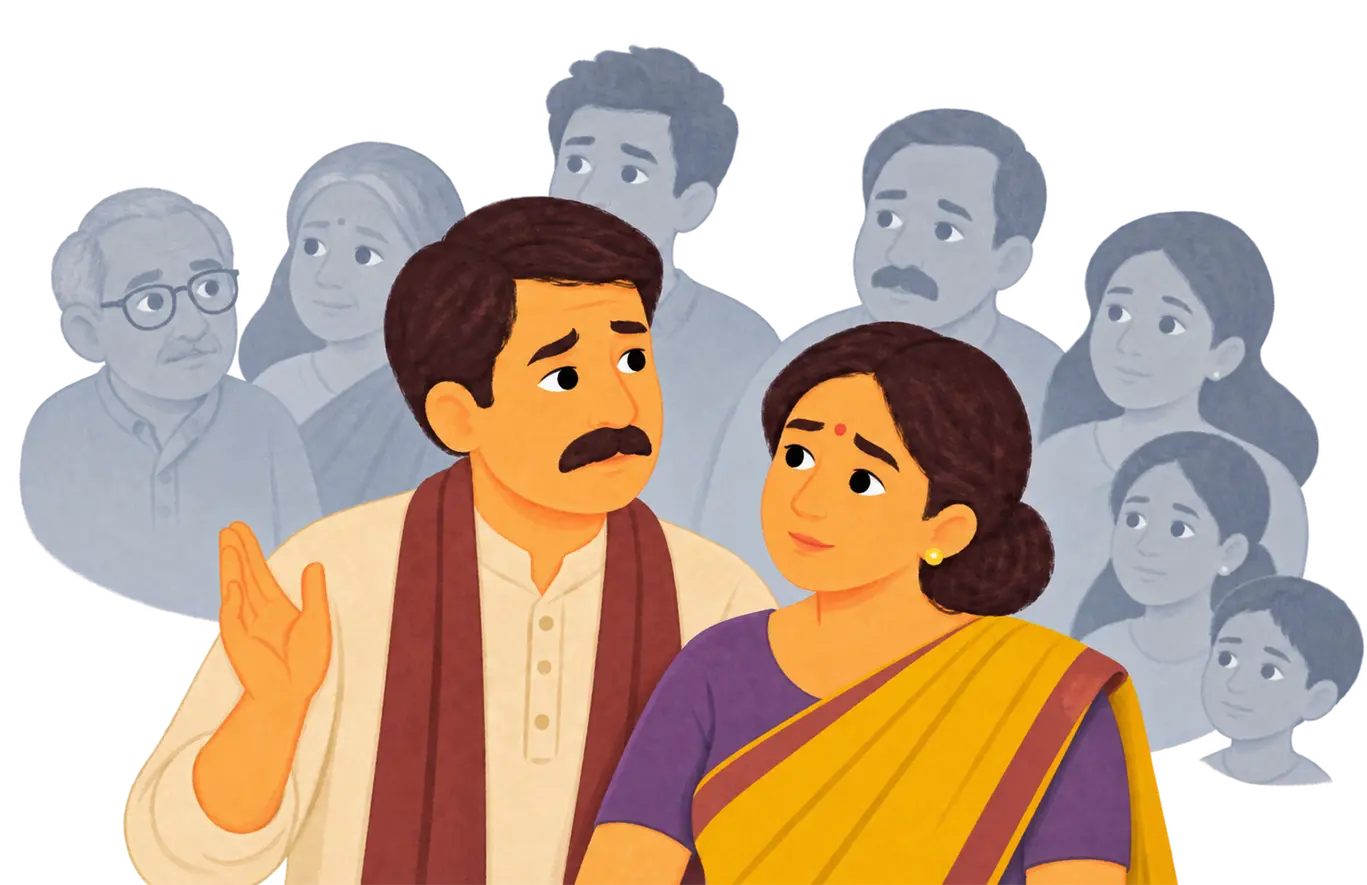
  • A worried couple in front, with a crowd of relatives standing behind them.

    “They were thinking too far ahead rather than how happy I am today.”

    Shubham Singh KushwahOn his parents’ fears about an inter-caste love marriage
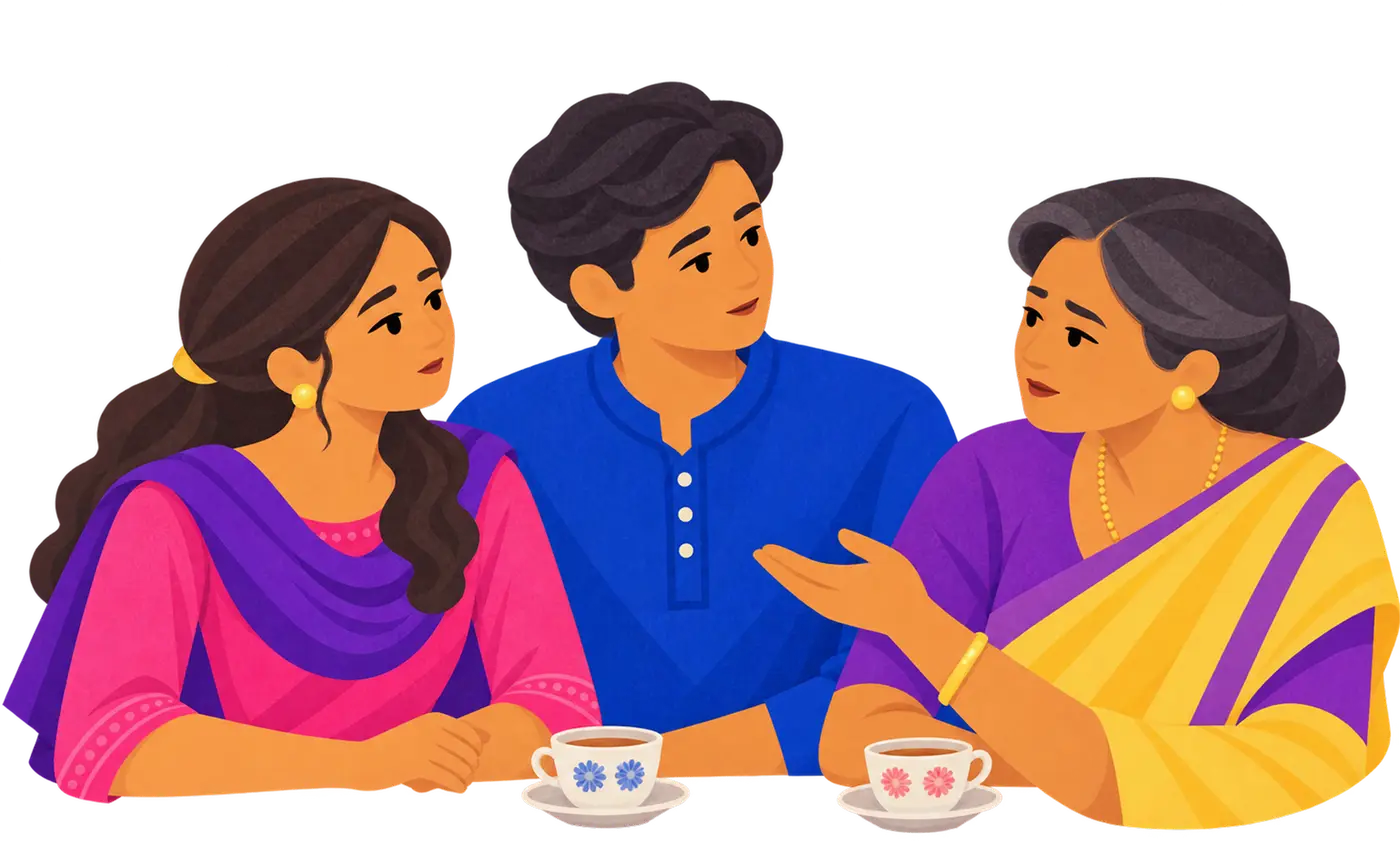
  • A young couple and an older woman talking things over at a table with tea.

    “When my mother-in-law met me before marriage, she got straight to the point "Will you work after marriage?" I said yes. Mother-in-law nodded, and added "In my family, till date no one (woman) has really worked much"”

    Ankita SinghSports teacher, Varanasi · love marriage
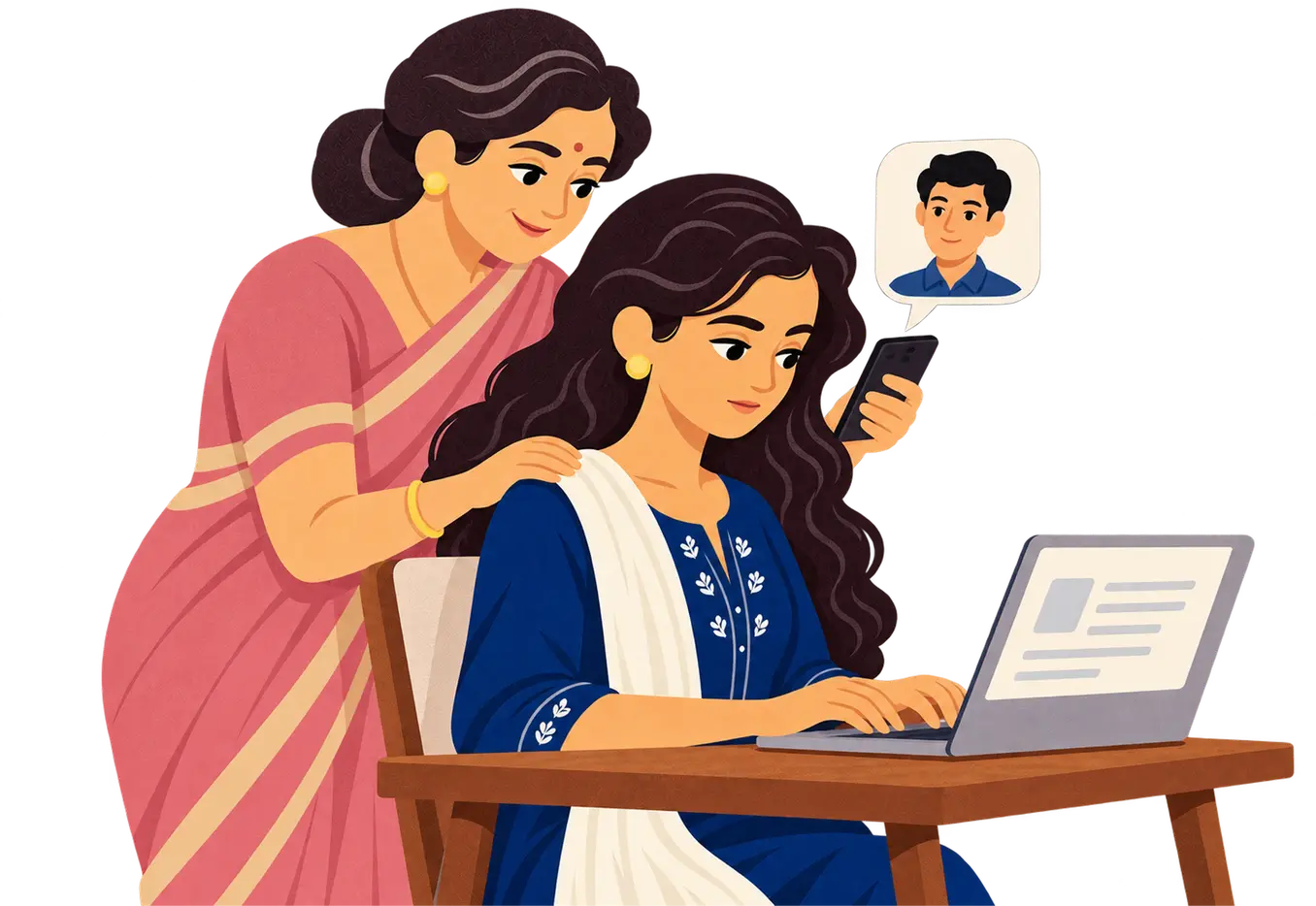
  • A mother leans over her daughter’s shoulder as she looks at a profile on a laptop.

    “I’m not searching anymore, madam, I gave up… If my parents have informed any relatives, maybe they might be looking.”

    Gauthami, 22Dance teacher, Anantapur · stopped searching

About the research

How we did it

We listened first, then counted. Interviews with prospects, parents and recently married couples shaped the themes. Surveys of three separate groups tested them at scale.

45in-depth interviews, 60–90 minutes each

  • 24 on the arranged-marriage track: 18 prospects and 6 parents.
  • 21 on the love-marriage track: 16 prospects and 5 parents.
  • Three card games in every interview: the search-channel journey, what actually mattered, and the checks run before saying yes.

692survey respondents, in three groups

  • 287Searching on Lokal

    Currently looking for an arranged match. Recruited on the Lokal app (Telugu form)

  • 263Love-married

    Recently married. Recruited through a research agency

  • 142Arranged-married

    Recently married. Recruited through a research agency

Read the numbers with care

  • The three groups were recruited differently. Each figure is reported against its own group, and we never pool answers into a single 692.
  • The searching group answered a Telugu form on the Lokal app and is mostly men: 271 of 287. The love-married group is evenly split, 133 men and 130 women.
  • The samples are not nationally representative, and answers are self-reported and recalled after the fact.
  • All participant names are pseudonyms.

Free download

Read the full report

Explore seven themes, five deep-dives and research-backed
charts. Download the full report for free.

The PDF link goes live here very soon.

Credits

Published by The India Notes · Research by Lokal & 1990 Research Labs

  • Research Sponsor

  • Research Studio

  • Publishing Partner

Source & context

Follow the evidence.

PDF Modern Marriage · full report

The published Bharat Insights report. Page references on this site follow the final report. This companion summarises selected findings; every chart shows its group and sample size (n).

Open report (PDF) ↗Open methodology section ↗

Read with the context attached.

This page is a web companion to Modern Marriage, not the full report. Summaries are condensed in plain language.

Every number belongs to one group — 287 people searching, 142 arranged-married or 263 love-married — and is never pooled into a single 692 finding. The full report remains the source of truth for wording, chart labels and participant context.

The report is titled Modern Marriage. It is Bharat Insights · Report 01, published with Lokal, The India Notes and 1990 Research Labs. Participant names are changed to protect privacy.

Download the full report ↓